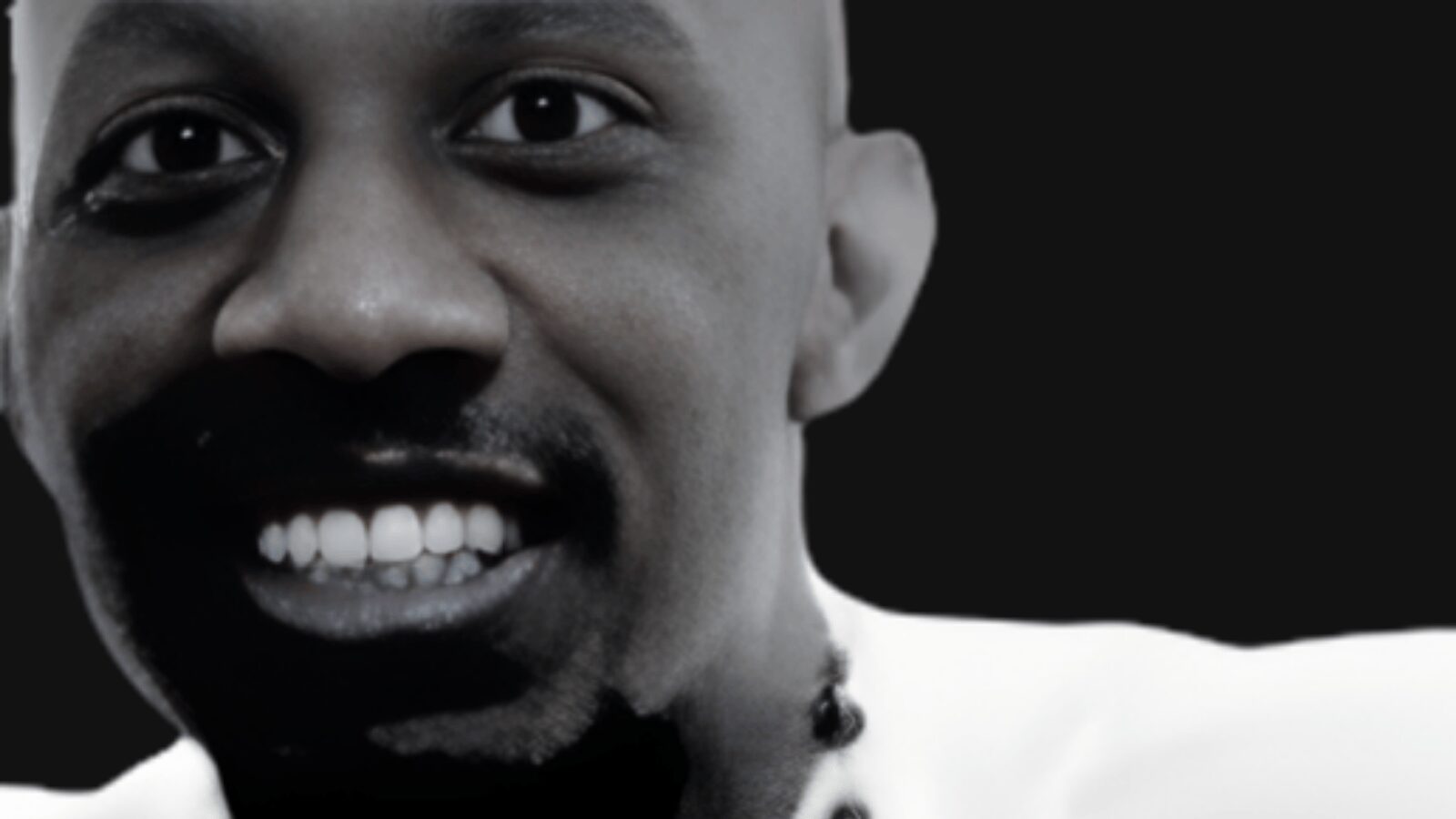
Monsour Owolabi is a New Afrikan poet, organizer, and politicized prisoner who has been held captive in Texas prisons for nearly 20 years, sentenced to life without parole. Like Xinachtli, Monsour endures the dehumanization central to the carceral system, yet has emerged as a revolutionary leader within and beyond prison walls, leading conversations about the violence and trauma U.S. prisons inflict on people.
The Xinachtli Freedom Campaign wants to thank Monsour for taking the time to speak about Xinachtli and how they met in such a soulful way. We encourage everyone to support Monsour and uplift his story.
You can listen to his latest interview on Final Straw Radio and follow his campaign on Instagram @plmtexas. Prison Lives Matter Texas is under the direction of PLM National, a united front for political prisoners, prisoners of war, politicized prisoners and their organizations, and outside formations united to abolish legalized slavery.
You can write to Monsour at:
Texas Department of Criminal Justice
Monsour Owolabi #01856112
PO Box 660400
Dallas, TX 775226-0400
Donate to Monsour via Cashapp $tierrayliberta or Venmo @tierraylibertad_, and write “Monsour” in the description.
Listen to Monsour’s full recording or read the transcript below.
This is Monsour Owalabi, political activist. I have been incarcerated inside Texas gulags, working with Prison Lives Matter and also New Afrikan Liberation Collective… I’m not usually too of an open person I’m more private, but I do believe that political prisoners in general tend to be dehumanized, right. And this is one of the mechanisms of the state that it does—dehumanize colonized people—whether they be in prison or otherwise. So whatever little ways that we can humanize [Xinachtli], humanize others, humanize our movement, I am down with it, so use this as you wish.
I met Xinachtli actually even before I met him. I was sent to solitary confinement. I did my 10 years in total in solitary confinement, but the initial time was in about 2013. I was part of a unit that was kinda notorious for a lot of racially motivated oppression and politically motivated oppression as well… I have life without parole and guys with a lot of time, we tend to share methods—legal methods—of how we can try to combat our cases, go on appeal, or different things that worked and haven’t worked. So Xinachtli’s name came up as an individual that you might want to talk to in the facility that had knowledge—legal knowledge. [He] has helped individuals get their case back in court or filed lawsuits against the state for different prison conditions and things like that. So this was maybe a few years before I actually had the chance to meet him personally. Fast forward, I never was able to do the legal work on my own path because the state has certain mechanisms in place that makes it hard to obtain your trial transcripts… and because people in prison are among the poor working class people in this country—in truth told, around the world—so we don’t have like, in my case, $1,600, to pay for papers on my own criminal case.
So years went by, nearly a decade or maybe eight years transpired, where I was in a facility with [Xinachtli], but not able to talk or even pass notes because the state has orchestrated a way that it isolates… We call it a scientific isolation. It’s a counterinsurgency method that was implemented after the 1970s when you had so many of our [revolutionaries become] political prisoners and prisoners of war around this country, and so [the state] came up with ways to isolate not only these people but their ideas.
When I finally did meet Xinachtli he had just come from surgery. Those who know him would know that he had contracted Hepatitis C while in prison. Like Mumia Abu-Jamal, another very famous political prisoner, may Allah free him, also has a legal battle against contracting Hep C in prison. Xinachtli and his supporters were able to utilize Mumia’s legal case to get Xinachtli the medical assistance that he had been needing. This continues today: People contracting Hep C inside Texas prisons are able to get the treatment that they need because of Mumia fighting, Xinachtli fighting, and others. I met Xinachtli when he was coming back from [surgery], and he was placed in the shower. We’re in solitary confinement, and at times, they put you in the shower, and they hold you in the shower for a long time because they’re doing all these different things before they come back to get you. So I was in what is called the “Day Room” which is like a recreational area but inside, and I had a newspaper called the San Francisco Bay News National Black Newspaper which, at the time, used to publish a lot of things related to national prison human rights movements that was gaining a lot of momentum. I was speaking to another individual about some of the articles and things in the paper. We used to utilize that paper to do political education and just generally dialogue on the movement taking place in prisons across America and communities across the world. This was our window to the outside as well as to other prisons, and it bonded individuals that were in resistance behind walls.
Upon Xinachtli hearing me speaking to this other individual he just stopped his shower and was like, “Hey brother, what’s your name?” I introduced myself and he said, “I heard of you” and I was like, “I’ve heard of you,” and it was like kindred spirits reconnecting although we were connecting in person for the first time.
So we spoke and you know, “Man where’s your cell at? Imma start sending you all this material and we’re gonna start to dialogue,” and things like that. We began to do that, and we began to discuss ways that we can actually organize, so we were beginning to organize around the psychological and physical torture that is solitary confinement in Texas prisons. Texas prisons hold the most people in the country in solitary confinement—a state of confinement that the UN has deemed to be psychological torture and is against international standards for the treatment of prisoners. Texas continues to ignore that standard and continues to torture Xinachtli as well as thousands upon thousands of individuals in the Texas prison systems. So [Xinachtli and I] formed an organization. I was a co-founder of that organization along with some other people and Xinachtli playing the role of elder/advisor, like telling us about his experience as one of the co-leading organizers for the biggest strike in Texas prison history. So him and I, we began to organize hunger strikes… We began to organize [around] multiple prisons in Texas—maybe about 12—and eventually spread to other states like Arizona, New Mexico, Connecticut.
We eventually were able to, in 2020, organize around 400 people in a hunger strike. As a consequence to that, we were eventually separated. Xinachtli was separated in 2021, I believe 2021-2022, as a response to our succeeding in guiding a mass participation in the series of strikes that got the attention of the state prison’s administrators.
Through that time we began to formulate a real strong bond of mentorship, him mentoring me and me being one of the younger leaders on the inside as far as organizing individuals, educating them about our revolutionary history and struggle in this country and around the world. Xinachtli became even more near and dear to me after he was separated. We were in the midst of him assisting me legally on my legal case that I’m in prison for, so that was halted as well as work that he was doing for another brother that was with us in the struggle who was assaulted by a police officer and they broke his jaw and whatnot. So Xinachtli was helping him and actually succeeded in winning a legal claim against the state and so he was separated from us because of that. What end up occurring was Xinachtli and some of his supporters helped me obtain those legal documents I mentioned at the beginning of this talk. So those documents, those legal transcripts, that they tried to charge me $1,600 for ended up getting through him and his supporters for like $5. And you know I had to pay to print them at Kinko’s or whatever the place was. That was really neat because, y’know what has occurred in this prison system going back to 1994-1996 during the Clinton era, y’know Congress, they put in place the 1994 crime bill and what’s called the Anti-Terrorism and Effective Death Penalty Act of 1996, which affects people that were led with domestic terror at that time and now, just your common incarcerated person, they have all these barriers in place that prevent us from properly fighting the charges that are against us even when we can showcase that so-called constitutional rights have been violated.
We come down to a hard truth that essentially, we have no rights. Whether we are in prison or we’re outside of prison. We have no rights. We only have power struggles, so those who have no powers, no means to influencing or controlling y’know, or having a seat at the table in these backdoor deals when they sign these laws and make certain decisions and policies that affect our lives. Well, we have no voice. It’s the reason why Xinachtli can be in prison for as long as he has been for defending himself, right. He has no right to defend himself.
So they are showing us, right, that the reason why he is there and why he’s been—by their standards—tortured—it’s not my words, it’s their words at the UN specifically—he’s been psychologically tortured for over two decades and continues [to be]. And yet, you have someone who is in a position of power, someone who’s wealthy, who’s in office, who has dozens and dozens of felonies, who’s never been held accountable for those felonies. Never been held accountable for his inhumane treatment of other people. He’s not tortured, right.
The difference is not skin color. The difference is class. The difference is roles in the society. And y’know we have to call it what it is. We have no rights, we have a power struggle that we are on the losing end of. And our struggle is all about shifting and transforming the dynamics of these power struggles, right. The elders used to have this political slogan saying “All Power to The People” because they understood that that was the basis of the struggle, and I think we have to relearn that. We have to get in touch with our history here and abroad. We have to heal from what colonialism and imperialism has done to us.
Xinachtli is a political prisoner and as such, he is an example, a part of the people’s story, a part of the Chicano people’s story. He is just one individual, but as an individual he makes up a piece of the puzzle that people need to utilize to get our current and future generations of people to understand that life has put in front of us and history has put in front of us a mandate, and we have to either propel it or betray it, and so I don’t want to go on and on, but I do want to humanize my brother and my elder Xinachtli and say that he is indeed a human being. He is indeed an individual worthy of dignity, and I think that people should be encouraged to fight for his freedom. To remember not only him but all political prisoners and prisoners of war that the imperialist project known as the USA has murdered behind these walls based on their political and military actions for freedom and dignity.
We have to say their names. We have to say the name of Mumia Abu-Jamal who is still behind the walls. We have to say the name of Imam Jamil who was recently murdered by the United States of America. We have to say the names of Black Liberation Army fighters, who lost their lives at a time when people were scared to admit that they were political prisoners behind the walls. Y’know, Abdul Majid, Albert “Nuh” Washington. Y’know what I mean. We have to say the names of our elders and ancestors, now ancestors that have died in exile like Assata Shakur and others. And when we familiarize ourselves not only with these individuals but with their sacrifices, with the ideals behind those sacrifices, we understand better what our mandate is and we decolonize ourselves or we begin to decolonize ourselves from within. So with that, I’m gonna close off again: Free our political prisoners and political prisoners of the war. Free Xinachtli, and I wish you all love and resistance.