The following article by Lana Barakeh was first published by Shift Press on July 04, 2026 under the title “Imprisoned But Undefeated: Houston Celebrates Legendary Chicano Freedom Fighter.“ We thank them for contributing to the struggle and for permission to reprint the article here.
“Xinachtli…”
“Presente!”
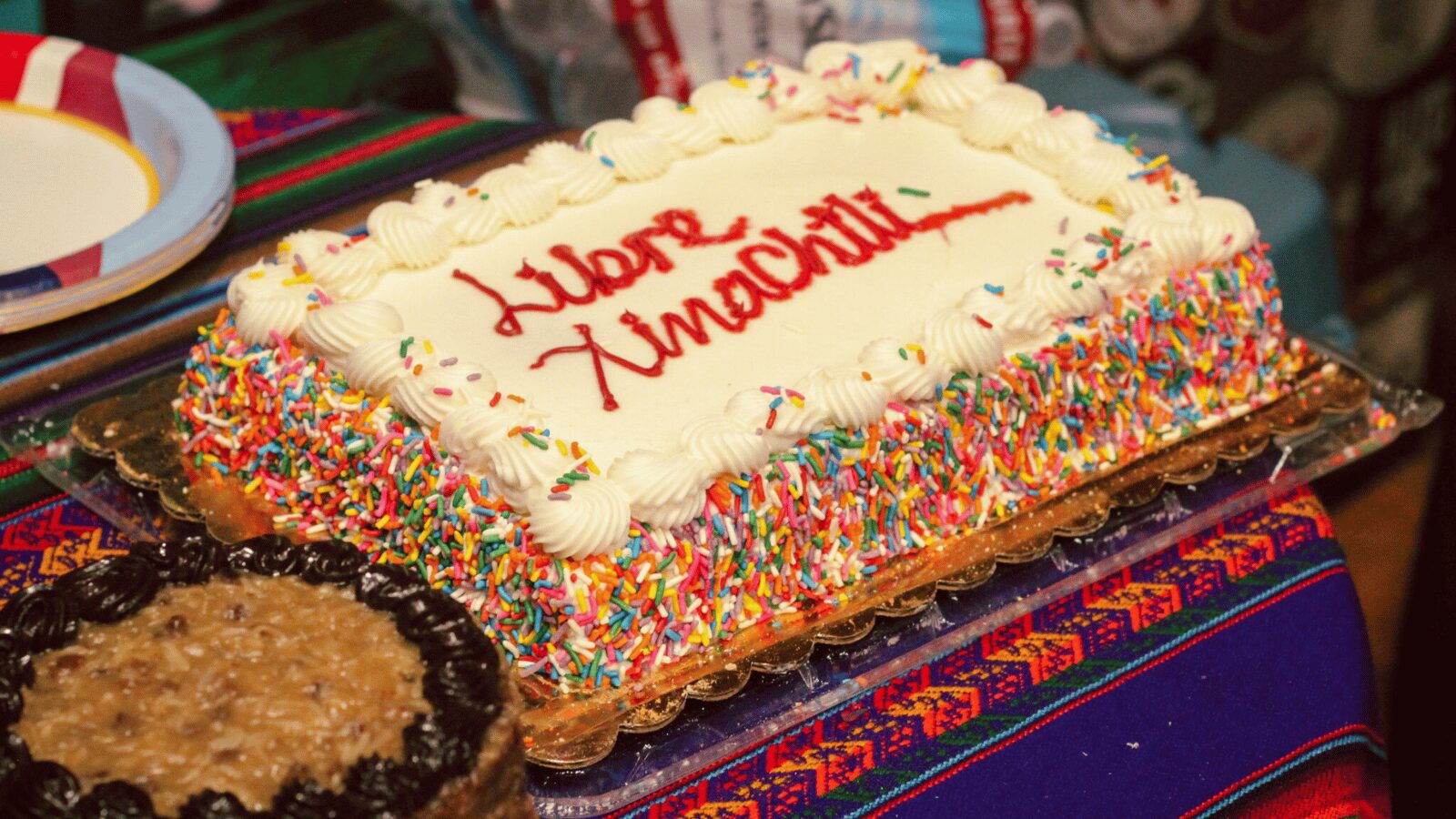
On Sunday, May 17, dozens of people at a Northwest side home took part in a traditional Latin American call-and-response to honor the martyrs and political prisoners of the Chicano movement. It was a celebration of the 74th birthday of Chicano revolutionary, Alvaro “Xinachtli” Hernandez, who has spent the last 24 years in solitary confinement in Texas prisons. Organized by the Xinachtli Freedom Campaign, the event wove together the tragedies and victories of the Chicano people’s movement, from the story of “Los Seis de Boulder” to the ongoing fight against Texas’ racist prison system, with political prisoners like Xinachtli at the forefront.
“De Colores…De Colores se visten los campos en la primavera…” Xinachtli’s voice filled the room as he sang the traditional Spanish folk song through a muffled recording. In the 1990s, Xinachtli and his comrades in the Houston Chicano movement used to play “De Colores” at the beginning of all their events. Xinachtli tells us the song “speaks of life, of country, of wildlife, of water, of sun, of air, and of land.” For supporters, liberating Xinachtli’s voice from his six by eight foot cell is a political duty.
Born on May 12, 1952 into a racially segregated society in Alpine, Texas, Xinachtli experienced the policing and targeting of Chicano youth firsthand. In the late 1970s, Xinachtli was sentenced to 15 years in prison for a crime he says he didn’t commit; his co-defendant’s conviction on the same evidence was fully overturned. While incarcerated, he educated himself on Chicano history, political theory and the prison system, transforming himself into a revolutionary and a brilliant jailhouse lawyer. After being released on parole in 1991 and returning to Houston, he spearheaded the National Movement of La Raza and the historic Ricardo Aldape Guerra Defense Committee, eventually freeing Ricardo Guerra from Texas death row and securing his exoneration. In 1995, Xinachtli moved back to Alpine and threw himself into organizing against police violence in the barrios of far West Texas.
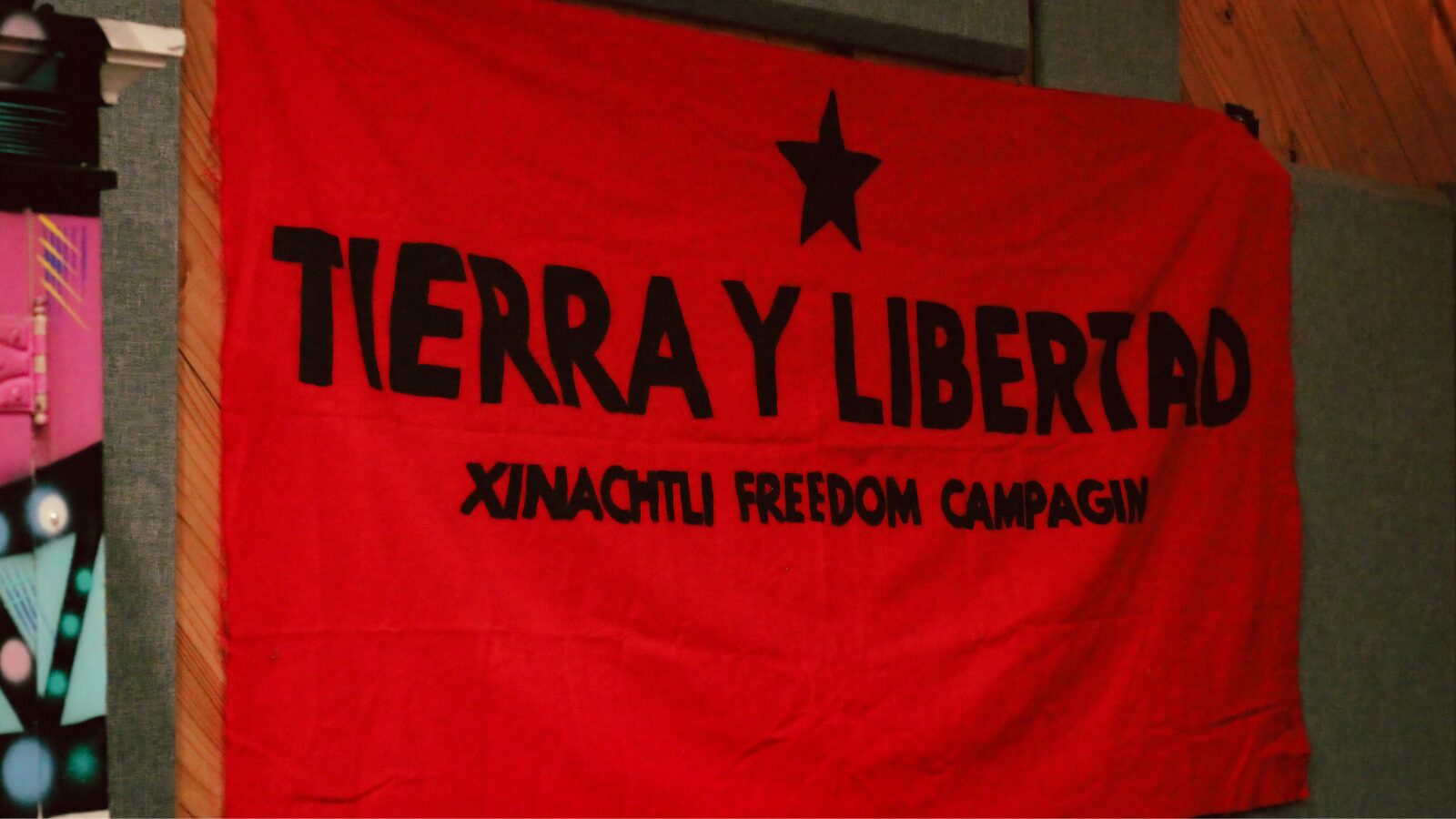
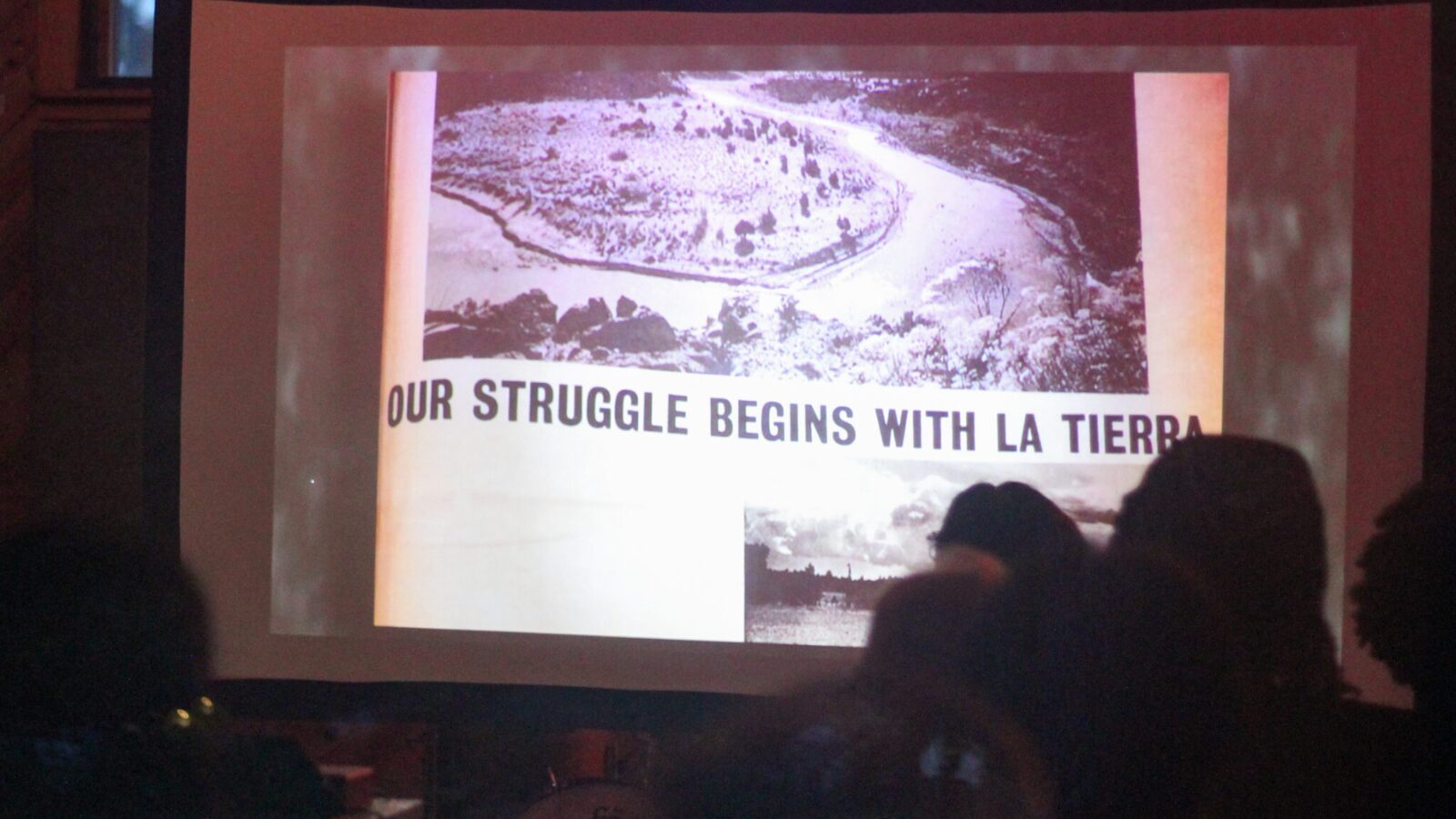
Photos by Ayesha Muzaffar. Credit: Shift Press. We recommend visiting the site for additional pictures of the celebration.
By 1997, Xinachtli was an internationally recognized Chicano freedom fighter. His work defending prisoners and exposing the Texas prison system also earned him the full weight of a targeted campaign from West Texas officials. At the age of 45, after three decades of police harassment, Xinachtli was sentenced to 50 years in prison for disarming a cop attempting to shoot him (the charge was aggravated assault). That cop, Sheriff Jack McDaniel, was the same man Xinachtli was investigating for corruption. In a 2011 Counter Punch article, Xinachtli asserted that the state’s motive was clear. “The police all knew what I was up to and they were determined to stop me at all costs.”
Organizers screened Symbols of Resistance, a documentary about Los Seis de Boulder, six young Chicano revolutionaries who were martyred in two car bombings at the height of the Chicano Rights Movement in May 1974. The U.S. government targeted these young students at the University of Colorado Boulder as part of the state’s war on the domestic liberation movements of the 60s and 70s.
Under the banner of “Tierra o Muerte,” the Chicano movement reignited the struggle for land. Only four generations earlier, the Southwest was a site of fierce Mexican and Indigenous resistance against U.S. military occupation. The land question sparked natural unity between the Chicano Movement and American Indian Movement (AIM).
Chicanos were also transformed by the anti-imperialist revolutions of the Global South. The examples of Cuba, the Democratic Republic of Congo, Algeria, and, most consequentially, Vietnam led the movement to draw parallels with the occupied lands of the Southwest and speak the language of self-determination. As Chicana leader Priscilla Falcon puts it in the film Symbols of Resistance, “All those ideologies flooded into our mindset, into our vocabulary. We began to see a reflection of ourselves in those struggles, and that was empowering.”
Falcon recounts the beginning of a thriving grassroots movement. “When we went to college we were able to come together and acquire an understanding of what had happened to our community. […] People came together and shared stories, shared experiences.”
By reconnecting Chicanos to their people’s history, storytelling became a vehicle for the students to build national consciousness. As Xinachtli said in the recording played that day, “Storytelling brings to life our tragedy, our traumas, some defeat…but also victory and liberation. It brings to our consciousness the power of the people, to decolonize minds, and to discover our own humanity.”
The student movement formed the militant intelligentsia of the Chicano struggle, and these student groups became the targets of a brutal state crackdown. All six UC Boulder martyrs were active in United Mexican American Students (UMAS), a vanguard organization on campus that often took its fight to the streets. University retaliation was relentless and included financial aid cuts and mass purges of Chicano students. On May 13, 1974, eight students occupied an office on campus, demanding the firing of staff that approved attacks on students. The occupation became the center of student organizing for the next three weeks. Police surveillance and harassment increased over the course of occupation, culminating in an explosion on May 27 in Chautauqua Park. Una Jaakola, Reyes Martinez, and Neva Romero, beloved comrades and leaders, were instantly killed. Forty-eight hours later, a second bomb went off, killing Florencio Granado, Francisco Dougherty, and Heriberto Teran. The community was devastated, and no one was ever held responsible for the murders.
State repression of the Chicano struggle has continued to this day, especially in Texas. It is largely characterized by the state’s most barbaric and pervasive weapon: the prison system. Political prisoners like Xinachtli, still labeled a security threat at 74, face the worst form of torture and isolation from the rest of the world.
Xinachtli has suffered medical neglect and elder abuse for decades now. His health took a turn for the worse months ago, after decades of abhorrent conditions in solitary confinement caught up with him.
Lifelong revolutionary, death penalty abolition advocate, and old friend of Xinachtli, Gloria Rubac described the accelerated aging process brought on by prison conditions.
“There’s got to be some statistic that if you’ve been in prison for thirty years, you gotta add another thirty,” Gloria said in an interview. She says treatment of elderly prisoners in particular is a crime. “I haven’t seen Xinachtli in a long time. My memories of him are this young, revolutionary, energetic fighter, and now he can’t walk? The worst thing about being in prison is the health issues, because you have no control over it.”
That’s why external pressure is crucial. Campaign organizers use a range of tactics to pressure the Texas Department of Criminal Justice (TDCJ) to concede to Xinachtli’s demands. Most recently, consistent phone bank efforts by the campaign succeeded in transferring Xinachtli back to the Carole Young Unit and restoring his communication. He had been held in chains at the UTMB Galveston, cut off from the outside world.
Xinachtli continues to fight for his life as his medical records reveal multiple life-threatening conditions. Every minute TDCJ denies him clean water, life-saving diagnostic care, a wheelchair, or medical treatment, supporters describe as “an intentional, slow, murder.”
Houston organizer Maria Salazar says her work with the Xinachtli Freedom Campaign and her relationship with Xinachtli have completely altered her political life.
“Xinachtli’s name really does him justice,” she told Shift Press. “His name means ‘germinating seed.’ Sometimes you just hear shit, and you just know it’s part of you. That’s how it was with Xinachtli. There was a seed that was planted, and it just became a part of me. I think primarily it meant that there was more to me than just being a passive organizer. There was more to me than just showing up to events, or showing up to the community and passing things out. I saw myself in the arc of the movement.”
“In general I feel like I’ve taken vows with the movement,” she continued. “Xinachtli is this being who has changed my life completely. So I have a revolutionary commitment to him.”
Xinachtli is up for parole in 2027. With consistent popular mobilization and a robust grassroots campaign, organizers believe that Xinachtli will be free. The campaign has already done much in the past year to stir up trouble for the TDCJ. The pressure must keep mounting, and Xinachtli’s story must be told. As Gloria puts it, “He is a very special person. We hear about Mumia, we hear about Leonard Peltier. We need to know about Xinachtli.”
About the Author
Lana Barakeh is a Palestinian writer and organizer based in Houston.
Featured photo: A birthday cake at the celebration. Credit: Ayesha Muzaffar for Shift Press.